Introduction
You walk down the grocery aisle feeling confident. You ignore the sugary cereals and head straight for the premium wellness section. You fill your basket with organic protein bars, plant-based milk, and chicory-infused yogurts proudly stamped with words like “Gut Healthy,” “Zero Sugar,” and “High Fiber.” You believe you are making the absolute right choices to heal your slow metabolism.
Yet, within an hour of eating your healthy snack, your clothes pinch. You look down in the mirror and see severe, tight abdominal distension. Your energy hits a wall, brain fog sets in, and you find yourself fighting intense sweet cravings before the afternoon is even over.
Here is the frustrating reality: the modern supermarket is packed with beautiful, green-washed packaging designed to trick health-conscious women. In 2026, the wellness industry has mastered the art of hiding highly irritating chemical compounds right on the ingredient list under the guise of health.
When your internal filter system is already congested, throwing these processed additives into your digestive tract triggers an immediate biological storm. You don’t have a broken body. You simply have a food label reading method that is playing right into the hands of clever marketing.
The Core Deficit: Hidden Ingredients That Cause Bloating
When left to navigate the grocery store alone, most high-performing women read food labels completely wrong. They flip the package over and focus entirely on the numbers. They check the total calories, count the grams of protein, and look for high fiber metrics. If the numbers look acceptable, the item goes into the cart.
This narrow focus on numbers completely blinds you to the actual text below them: the ingredient list. Food manufacturers routinely use synthetic fibers, thickeners, and alternative sweeteners to keep their calorie counts low and their fiber counts high. These are the exact hidden ingredients that cause bloating and stall your weight goals.
To help you audit your kitchen right now, look at the most common hidden irritants found in premium health foods:
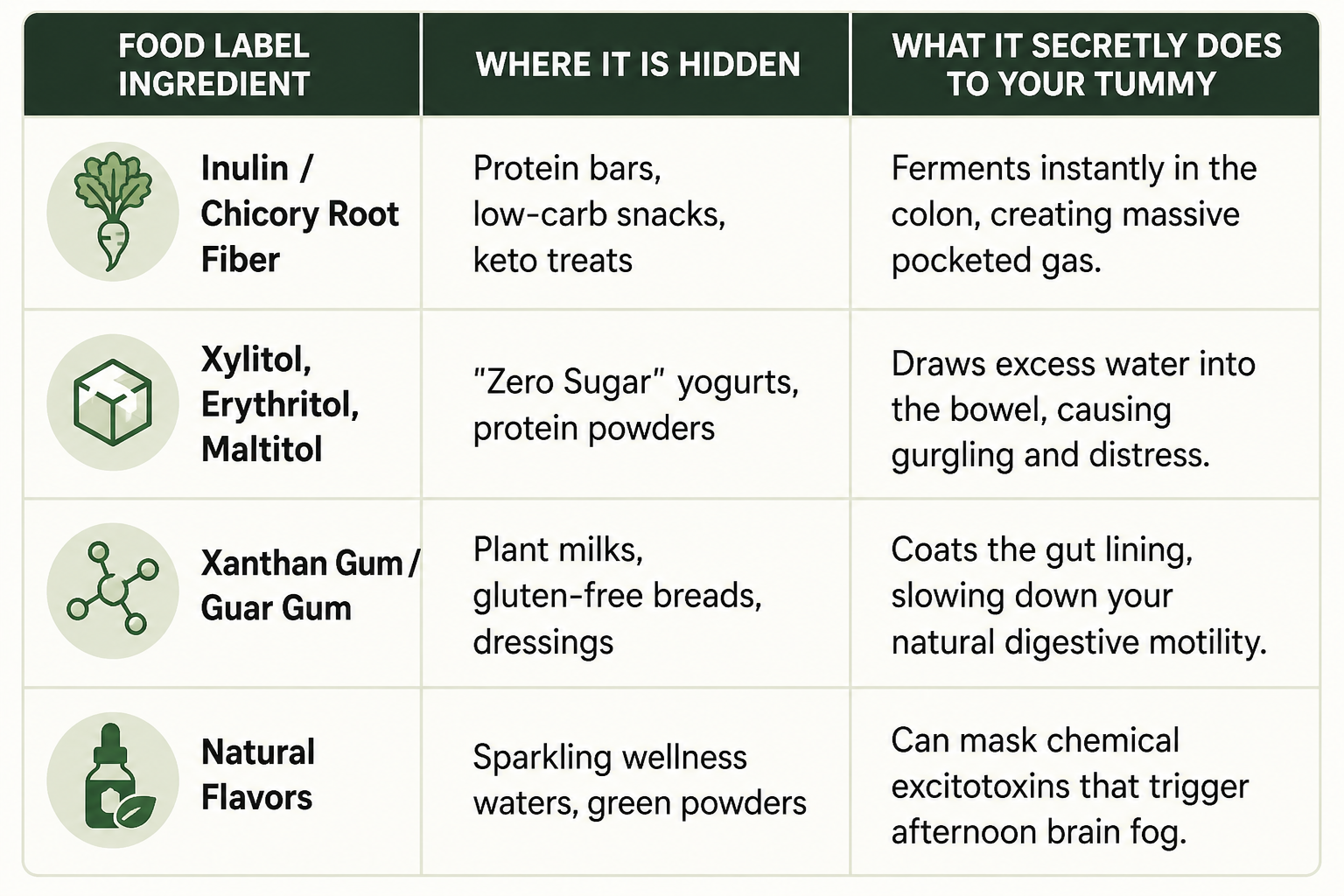
True food-first ways to support digestion require you to stop looking at food as a math equation of calories and start looking at it as chemical information. When you consume highly processed thickeners and isolated fibers, your gut bacteria ferment them at an unnaturally rapid pace. This rapid fermentation creates pocketed gas, causing your stomach to swell like a balloon.
To break this cycle, you must stop trying to solve your digestive issues with self-directed grocery shopping. Our visual plate management system eliminates the need for packaged health foods entirely. By focusing on whole, single-ingredient proteins, balanced fats, and properly cooked carbohydrates, you establish strict structural boundaries that give your digestive system the rest it needs to clear out trapped waste safely.
Why Willpower Fails Without Personalized Accountability Coaching for Wellness
Most busy women assume they just need more discipline to survive the midday bloat. When the physical discomfort hits, they assume they must have eaten too much. They panic, look up how to get rid of bloating on their phones, and resort to missing meals entirely the next day to compensate. This chaotic swing from over-restricting to impulsive, stress-induced snacking is where self-sabotage thrives.
This is exactly why automated meal trackers and generic grocery lists fail. A phone app cannot talk you down when you are standing in the pantry feeling physically uncomfortable and emotionally exhausted. It cannot analyze why a specific “healthy” bar triggered an inflammatory reaction. Real, permanent transformation requires high-touch personalized accountability coaching for wellness.
When you have a dedicated specialist validating your grocery choices and meal structures in real time via daily WhatsApp check-ins, the guesswork disappears. Instead of abandoning your goals when you hit a wall, you receive immediate somatic checks to connect your stress levels to your physical symptoms. You learn the exact lifestyle architecture needed to navigate the supermarket with absolute clarity.

The 1 Simple Trick to Spot Fake Gut Foods
To protect your physical peace, you must implement the “Rule of Five Ingredients.”
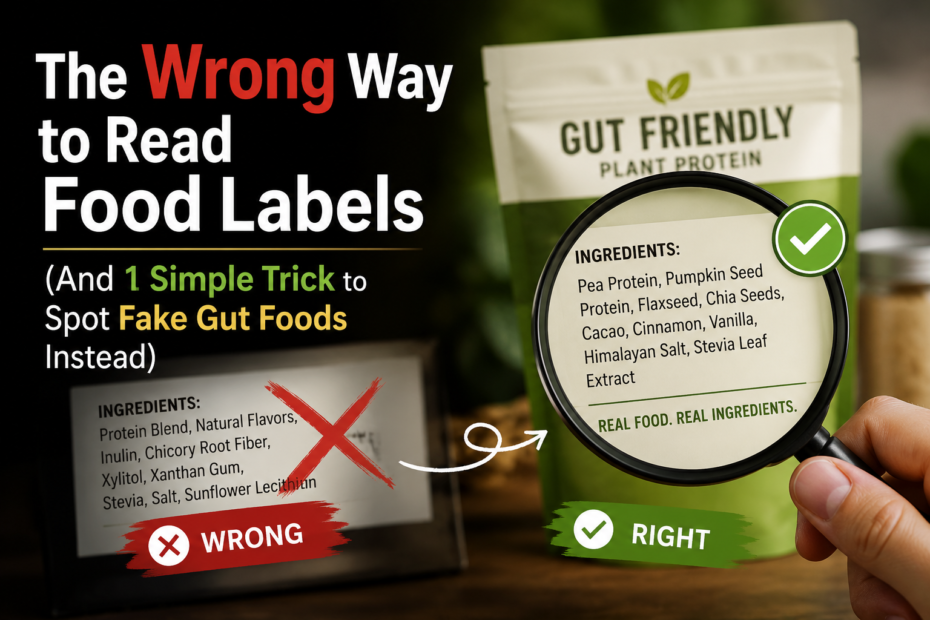
When you flip a package over, skip the calorie box entirely and look straight at the very first line of the ingredient list. If the food contains more than five distinct ingredients, or if it includes words that sound like they belong in a science laboratory rather than a kitchen, put it back on the shelf.
Fake gut foods rely on long lists of text to mimic the texture and shelf-life of real food. Real, metabolism-boosting fuel does not require emulsifiers, gums, or chemical sweeteners to taste good or preserve its structure.
By applying this single rule, you instantly eliminate the synthetic compounds that clog your liver filters and slow down your system. You shift your focus away from packaged corporate promises and move toward true, whole-food nourishment.
FAQS
Clear answers to help you start your wellness journey with confidence
1.Why do “zero sugar” health foods cause severe stomach bloating?
Zero sugar products replace regular sugar with sugar alcohols or artificial sweeteners. Your body cannot fully absorb these compounds. They travel straight to your lower digestive tract, where your gut bacteria feed on them and create rapid gas.
2.How do thickeners like xanthan gum affect my metabolism?
Thickeners are used to make watery foods feel thick and creamy. Inside your body, they act like a heavy glue, coating your intestinal walls and slowing down the movement of food. This congestion leads to fermentation, water retention, and fatigue.
3.What is the fastest way to heal my digestion without tracking calories?
The fastest way is to return to whole, single-ingredient foods and implement real-time accountability. By tracking how your body feels after eating rather than just counting numbers, you learn to spot food triggers instantly and build a legacy lifestyle that lasts.
Reclaim Your Physical Peace and Clarity
Stop letting confusing food labels dictate your health and stall your daily energy. It is time to step out of the exhausting cycle of supermarket guesswork and build a predictable lifestyle that truly supports your body.
Click here for our 60-second quiz to discover your exact metabolic entry point, and join our weekly Gut Health Reset & Detox Webinar to see the clinical architecture that clears chronic inflammation for good.